Your Phone Is Buzzing on Purpose: The Dark Science Behind App Notifications
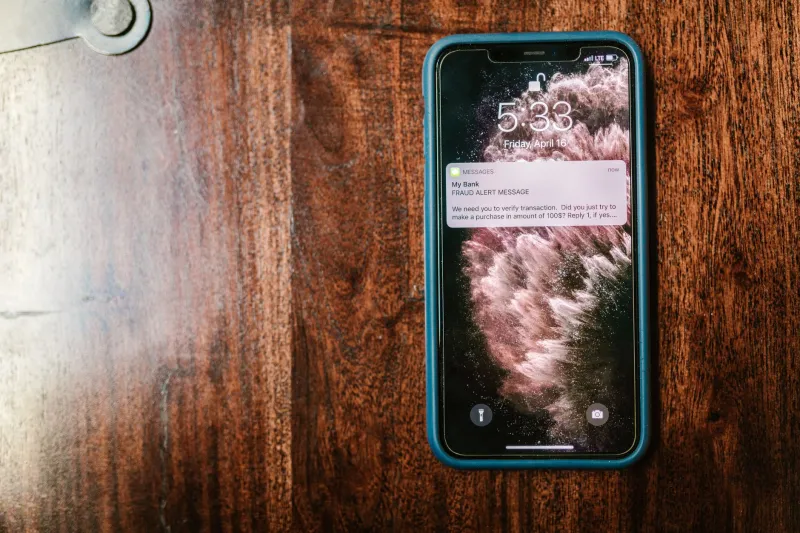
You wake up, roll over, and before your eyes have even adjusted to the morning light, your phone is already screaming at you. Twelve notifications. A badge on your email app. A red dot on Instagram. A "you haven't checked in a while" nudge from an app you downloaded six months ago and barely use. It feels chaotic, maybe even accidental. It isn't.
Every single one of those interruptions was deliberate. Not just in the sense that a developer once wrote a line of code to trigger them — but deliberate in the way a casino floor is deliberate. Engineered. Optimized. Tested against millions of users until the timing, the wording, and the frequency hit just right.
Welcome to the notification economy, where your attention is the product and your anxiety is a feature, not a bug.
The Algorithm Decides When You Twitch
Most people assume notification timing is simple: something happens in an app, the app tells you. But that's not how it works at the major platforms anymore. Companies like Meta, Google, and ByteDance run what are effectively notification recommendation engines — machine learning systems that analyze your behavior patterns to figure out the exact moment you're most likely to re-engage.
Think about that for a second. It's not just that you get notified. It's when. These systems track when you've historically opened the app, how long you stayed, what you clicked, and even what you ignored. Then they use that data to time their next ping for maximum psychological impact. If you tend to check Instagram around 7 p.m. on weekdays, expect the algorithm to nudge you right around 6:45 — just enough to pull you in before you've settled into your evening.
Meta has been fairly open about this in its developer documentation, describing "notification optimization" as a tool for improving "relevance." But relevance to whom, exactly? To you, or to the advertiser waiting on the other side of your tap?
Psychologically Wired to Respond
The reason this works so well is that app designers didn't invent these psychological hooks — they just borrowed them from decades of behavioral research. Variable reward schedules, the same mechanism that makes slot machines so hard to walk away from, are baked into how notification systems are built. You don't know if the next buzz will be something exciting or totally mundane, and that uncertainty is precisely what makes you check anyway.
B.J. Fogg, the Stanford researcher whose work essentially became the playbook for Silicon Valley's persuasive design movement, outlined how small triggers — like a notification — can reliably produce habitual behaviors when paired with the right motivation and timing. What he didn't fully anticipate, or at least didn't loudly warn about, was how aggressively those principles would be weaponized at scale.
The result is a population that checks their phones an average of 96 times a day, according to research from Asurion. That's once every ten minutes during waking hours. And a significant chunk of those checks are triggered by notifications that, if you're being honest with yourself, didn't require an immediate response.
Turning Off Notifications Is Supposed to Feel Hard
Here's where things get a little uglier. If notifications were genuinely designed for your benefit, opting out of them would be frictionless. It isn't.
Try disabling notifications on a major social app and count the steps. On many platforms, you'll navigate through multiple menus, encounter vague toggle labels, and face dark patterns that make it unclear whether you're actually disabling anything or just adjusting a subcategory. Some apps re-enable certain notifications after updates, quietly resetting your preferences without explicit notice. Others send you a notification about turning off notifications — a move so brazen it almost has to be satirical.
Researchers who study dark patterns — design choices that manipulate users into actions that benefit the company rather than the user — have flagged notification management as one of the most common offenders. A 2022 study published in the journal Behaviour & Information Technology found that a majority of popular apps made it significantly harder to reduce notifications than to enable them, a disparity that can't really be explained by anything other than intent.
The Toll on Your Brain and Your Work
The downstream effects of all this aren't subtle. Notification fatigue is real, clinically documented, and getting worse. Research from the University of California, Irvine found that it takes an average of 23 minutes to fully regain focus after an interruption. Multiply that by the number of times your phone buzzes during a workday and you start to understand why so many people feel perpetually behind, perpetually scattered.
Mental health researchers have drawn connections between high notification volume and elevated cortisol levels — the stress hormone your body releases when it perceives a threat. Your nervous system doesn't naturally distinguish between "a bear is chasing you" and "someone liked your photo," and apps are happy to exploit that ambiguity all day long.
For younger users especially, the picture is concerning. Studies tracking adolescent smartphone use consistently show correlations between heavy notification exposure and increased anxiety, disrupted sleep, and reduced attention spans. The American Psychological Association has flagged technoference — the intrusion of technology into daily life — as a growing mental health concern, and notifications are one of its primary delivery mechanisms.
So What Can You Actually Do?
The uncomfortable truth is that the system isn't designed to make this easy on you. But there are practical moves worth making.
Start with a notification audit. Go through your phone's settings and ask yourself honestly: does this app need real-time access to my attention? For most apps, the answer is no. Email, social media, shopping apps — none of these require you to respond within minutes. Turn off everything except calls, texts, and calendar reminders, then add back only what genuinely improves your day.
On both iOS and Android, Focus modes and scheduled notification summaries have gotten more capable. Apple's Focus filters and Google's Digital Wellbeing tools aren't perfect, but they can batch your interruptions into a few designated windows instead of scattering them across your entire day.
And be skeptical of any app that makes opting out unnecessarily complicated. That friction is a signal — the company is telling you, in design language, that your attention is more valuable to them than your peace of mind.
The Bigger Picture
Notifications are a microcosm of a much larger problem in the tech industry: the misalignment between what companies say they're optimizing for and what they're actually optimizing for. The pitch is always "we want to keep you informed" or "we want to enhance your experience." The reality, traceable through product decisions and internal research that occasionally leaks out, is that engagement metrics drive the ship.
Your attention is finite. The platforms competing for it are not. Until the incentive structure changes — through regulation, genuine corporate accountability, or user revolt — the pings will keep coming, timed to the millisecond to catch you at your most vulnerable.
The least you can do is make them work a little harder for it.