Mid-Range GPUs Are a Myth Now: How Gaming PC Builds Got Priced Into the Stratosphere
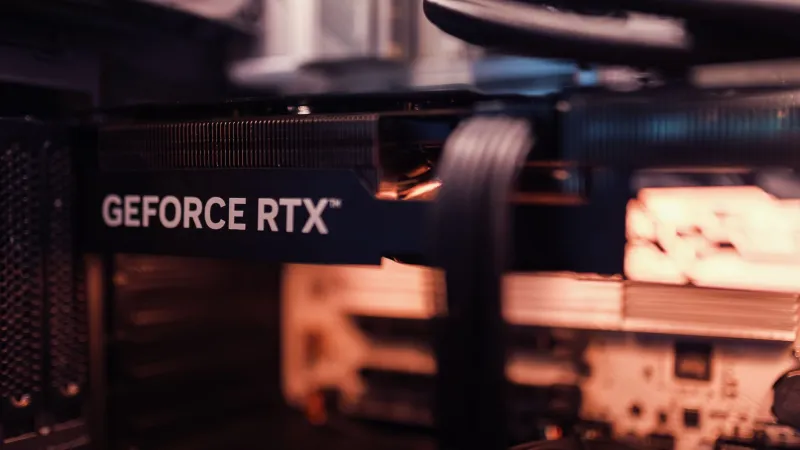
Remember when building a gaming PC was the smart, budget-conscious move? You'd drop $300 on a solid mid-range GPU, pair it with a decent processor, and walk away with a rig that stomped any console on the market. That era didn't just fade — it got quietly buried under a pile of supply chain chaos, corporate AI spending, and crypto mining hangover that nobody seems to want to fully acknowledge.
In 2024, the so-called "sweet spot" for graphics cards has drifted so far north that it's practically unrecognizable. Cards that should reasonably cost $250 are sitting on shelves — or more often, sitting out of stock — at $400 and up. And the reasons why are messier than any single headline gives them credit for.
The Shortage That Didn't Actually End
The narrative after 2021 was optimistic: crypto crashed, mining rigs flooded the secondhand market, supply chains normalized, and everything would be fine by Q3 2022. Analysts said it. Nvidia said it. Retailers said it. None of it held.
What actually happened was more complicated. Yes, the initial crypto mining frenzy cooled off. But the infrastructure built around GPU demand — TSMC's fab allocations, Nvidia's pricing strategy, board partner margins — didn't reset. Nvidia, in particular, discovered something valuable during the shortage: people would pay dramatically more than they used to. So they kept prices elevated and reframed it as the new normal.
The RTX 4060, marketed as an entry-level card for mainstream gamers, launched at $299. That sounds reasonable until you realize its predecessor, the RTX 3060, launched at the same price with arguably comparable real-world performance for most gaming workloads. The "new" card wasn't cheaper — the bar just moved, and consumers were expected to follow.
AI Is Eating the GPU Supply Chain Alive
Here's the part that doesn't get enough airtime in gaming circles: enterprise AI demand has fundamentally rewired how semiconductor companies prioritize production. Nvidia's H100 and A100 data center chips generate margins that make consumer GeForce cards look like charity work. When fab capacity is constrained — and it almost always is — where do you think the wafers go?
This isn't speculation. Nvidia's data center revenue has eclipsed its gaming segment by a staggering margin. In fiscal 2024, data center brought in over $47 billion. Gaming? Around $10 billion. When you're a publicly traded company answering to shareholders, the math on where to focus production isn't hard.
The downstream effect is that consumer GPU production gets squeezed, not because TSMC can't physically make the chips, but because the economics of doing so are less attractive than cranking out more H100s for Microsoft, Google, and Meta. Your $350 gaming card is competing with enterprise infrastructure spending, and it's losing.
The Pre-Built Trap and the Subscription Pivot
So what do most consumers do when building a PC becomes financially painful? They buy pre-builts. And that's not necessarily terrible advice in 2024 — brands like Dell's Alienware, HP's Omen line, and a dozen boutique builders have gotten more competitive. But the margins are still padded, and you're often locked into proprietary cooling solutions and cramped cases that make future upgrades a headache.
More quietly, subscription gaming has stepped into the gap with suspiciously good timing. Xbox Game Pass Ultimate, NVIDIA GeForce Now, and PlayStation's cloud offerings have all leaned hard into the pitch that you don't need expensive hardware if you're streaming from the cloud. It's a compelling argument — until you factor in latency on anything less than a fiber connection, game library limitations, and the uncomfortable reality that you don't own a single thing you're playing.
The industry has a vested interest in you not building your own PC. Every gamer who throws up their hands and buys a console or subscribes to a cloud service is a gamer who stopped demanding affordable components. That's not a conspiracy — it's just how market incentives work.
What the Secondhand Market Actually Looks Like Right Now
If you're determined to build or upgrade in 2024, the secondhand market deserves a serious look — with caveats. Post-crypto crash, a wave of used cards hit platforms like eBay and Facebook Marketplace, and while that wave has mostly settled, deals still surface regularly.
RTX 3070 and 3080 cards from the previous generation frequently show up in the $200–$300 range, and for 1080p or moderate 1440p gaming, they're genuinely excellent. AMD's RX 6700 XT and 6800 XT are similarly strong secondhand buys. The catch: you need to vet the seller carefully. Cards that spent two years in a mining rig running at 100% load 24/7 are not the same as a card that lived in a gamer's tower and got used for eight hours a week.
For new purchases, AMD has done a better job than Nvidia at hitting reasonable price points with its RX 7600 and 7700 XT cards, though even those feel slightly stretched compared to what they'd have cost in a healthier market. Intel's Arc lineup remains a wildcard — the drivers have improved, but the ecosystem support still lags.
The Honest Advice Nobody Wants to Give
Here's the uncomfortable truth: if you were hoping for a return to the golden era of $200 GPUs that could run anything at high settings, that era is probably gone for good. Not because the technology got more expensive to make — it didn't, really — but because the market learned it could charge more and consumers would adapt.
What you can do is stop chasing the newest generation at launch prices. The GPU market rewards patience in a way few other tech categories do. Waiting six months after a card launches almost always yields a meaningful price drop or a better competing option. Buying previous-gen on sale or secondhand is often smarter than buying current-gen at MSRP.
And if you're genuinely on a tight budget? A PlayStation 5 or Xbox Series X at $499 still delivers an experience that would have required a $1,200 PC build to match just a few years ago. That's not a ringing endorsement of console gaming — it's just where the math lands right now.
The GPU market isn't broken in a way that's going to get fixed by a single product launch or a press release about new fab capacity. It's been reshaped by forces — AI spending, crypto residue, corporate pricing discipline — that aren't going anywhere fast. The smartest thing a PC gamer can do in 2024 is understand that landscape clearly, rather than waiting for a rescue that isn't coming.