Pinged to Death: The Hidden Cost of Apps That Won't Leave You Alone
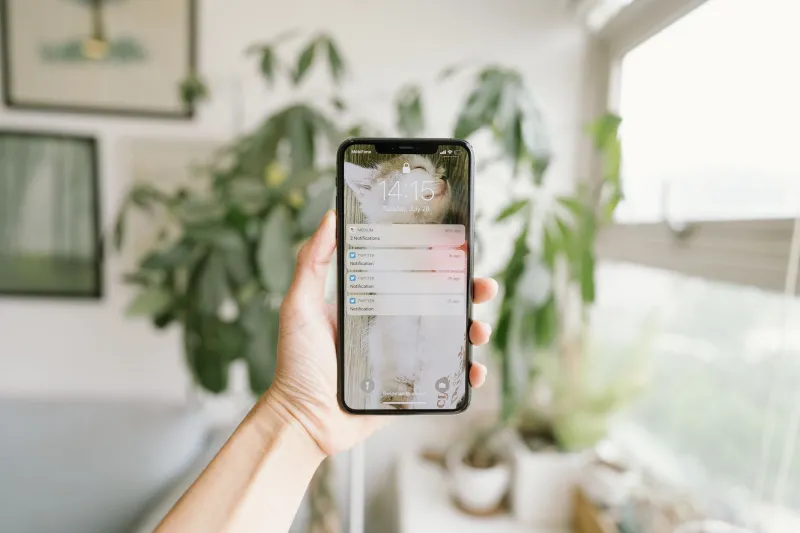
You're in the middle of something. A report, a conversation, maybe just a quiet moment with your coffee. Then your phone lights up. A badge appears. A banner slides across your screen like it owns the place. You tell yourself you'll ignore it, but your eyes have already drifted over. Concentration broken. Focus gone. Welcome to the notification economy — and you're not the customer. You're the product.
Notifications have quietly evolved from a useful utility into one of the most psychologically sophisticated attention-capture systems ever built. And most of us have no idea how deep the rabbit hole goes.
The Buzz Is by Design
Let's get one thing straight: there is nothing accidental about how push notifications are structured. The timing, the wording, the red badge sitting on your app icon like a tiny alarm — all of it is the result of deliberate design choices backed by behavioral research.
The core mechanic is something psychologists call variable reward reinforcement. It's the same principle that makes slot machines so effective. You don't know if the next notification will be something genuinely important or just noise, so your brain keeps checking. The uncertainty is the hook.
Behavioral scientists have noted for years that unpredictable rewards trigger dopamine responses more reliably than predictable ones. App teams — particularly at social platforms, news apps, and e-commerce giants — have built entire notification strategies around this quirk of human neurology. They don't just want to inform you. They want to condition you.
"The goal isn't to tell you something useful," says one former UX designer who worked on notification systems at a major social app and asked not to be named. "The goal is to get you back in the app. Everything else is secondary."
Dark Patterns in Your Pocket
If you've ever tried to turn off notifications for an app and found the process weirdly confusing, that's not a bug — it's a feature. This falls squarely into the category of dark patterns: interface choices designed to work against user interests while appearing neutral or even helpful.
Some of the most common notification dark patterns include:
- Guilt-trip language in permission prompts ("Don't miss out on deals just for you" vs. a simple "Allow notifications")
- Opt-out friction that buries notification settings three or four menus deep
- Re-permission requests that pop up again after you've already said no
- Manufactured urgency in notification copy ("Your cart is about to expire!" — spoiler: it's not)
- Social pressure hooks ("14 people reacted to your post" when really two people liked it)
The Federal Trade Commission has started paying more attention to manipulative digital design in recent years, and a handful of states have proposed legislation targeting deceptive app interfaces. But enforcement is slow, and the practices are widespread.
What It's Actually Costing You
Here's where it gets uncomfortable. The productivity hit from constant interruptions is well-documented and genuinely alarming. Research from the University of California, Irvine found that it takes an average of over 23 minutes to fully regain focus after an interruption. Do the math on how many times your phone pulls your attention in a given workday.
Gloria Mark, a professor of informatics who has studied digital distraction extensively, has described the modern attention environment as one that fundamentally rewires how people work — pushing them toward shallower, more fragmented cognitive patterns over time. In plain terms: constant interruptions don't just cost you time in the moment. They may be gradually changing how your brain handles sustained focus.
Beyond productivity, there's a mental health dimension that's getting harder to ignore. Anxiety, decision fatigue, and a persistent sense of being "behind" are all associated with high notification loads. When your phone is constantly signaling that something needs your attention, your nervous system stays in a low-grade state of alertness. That's exhausting — even when the notifications themselves seem trivial.
And then there's the data angle. Every notification you engage with tells the app something. Which type of message gets you back in. What time of day you're most responsive. Whether urgency language works better than social validation for you specifically. That behavioral data feeds back into increasingly personalized — and increasingly effective — notification targeting.
Who's Actually Winning This Game
Spoiler: it's not you. The apps with the most aggressive notification strategies tend to be the ones with the most to gain from raw engagement numbers — social media platforms, mobile games, shopping apps, and news aggregators. Their business models are built on time-in-app, and notifications are the most direct lever they have to pull.
Some platforms have made token gestures toward notification health. Apple introduced notification summaries in iOS. Google has nudged developers toward more responsible notification practices in Android guidelines. Instagram added "quiet mode." These are real features, but they also require users to actively seek them out — which most people don't.
Meanwhile, the average American smartphone user receives somewhere between 65 and 80 push notifications per day, according to various mobile analytics estimates. That's a lot of interruptions to "opt out" of one by one.
Taking Your Attention Back — Practically
The good news is you have more control than the apps want you to think. It just takes a few minutes of intentional setup.
Start with a notification audit. Go into your phone's settings and look at every app that has notification permissions. Seriously, all of them. You'll almost certainly find apps you forgot you installed that are still pinging you regularly.
Default to off, allow selectively. Flip your mental model. Instead of asking "should I turn this off?" ask "is there a genuine reason I need real-time alerts from this app?" For most apps, the honest answer is no.
Use scheduled delivery where available. Both iOS and Android let you batch certain notifications for specific times. This is a game-changer for email and news apps especially.
Turn off badges. The little red number sitting on your app icon is a constant low-level anxiety trigger. Disabling badges for non-critical apps removes a lot of that ambient pressure.
Try a "focus block" routine. Designate chunks of your day where your phone goes to Do Not Disturb — not just silenced, but fully locked down. Even one or two focused hours a day makes a measurable difference.
The Bigger Picture
Notifications aren't inherently evil. A text from your kid's school, a two-factor authentication code, a calendar reminder — these are notifications doing exactly what they should. The problem is that useful alerts have been buried under an avalanche of engagement-farming noise, and the systems that govern all of it were built to serve app revenue, not user wellbeing.
Until regulators catch up — or until enough users push back hard enough that companies feel it in their engagement metrics — the default setting is always going to favor the app. Your attention is worth money. The question is whether you're going to keep giving it away for free.