Same Port, Total Chaos: The USB-C Promise That's Still Not Delivering
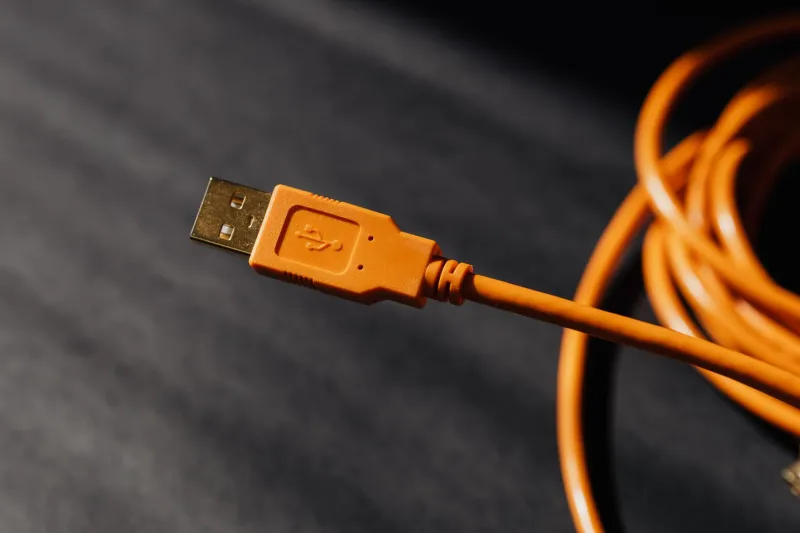
Picture this: you're digging through that junk drawer — you know the one — hunting for a cable to charge your laptop. You find a USB-C cord. Great. You plug it in. Nothing happens. Or worse, it charges at the speed of a dying AA battery trying to power a Tesla. You swap it for another USB-C cable. Same connector, same port. Suddenly your laptop is juicing up at full speed.
Welcome to the USB-C reality check nobody warned you about.
The promise was beautiful in theory. One cable, one port, everything works together. No more Lightning versus micro-USB versus that weird proprietary barrel connector your old ThinkPad needed. The European Union even turned the dream into law, mandating USB-C across consumer electronics by 2024. Apple finally caved. Manufacturers fell in line. The tech press celebrated.
So why does your cable drawer still look like a graveyard of tangled, half-functional confusion?
The Port Is the Same. Almost Everything Else Isn't.
Here's the uncomfortable truth that nobody puts on the box: USB-C is a connector shape, not a performance guarantee. The physical port you're looking at could be hiding any one of a half-dozen completely different underlying standards — USB 2.0, USB 3.2, Thunderbolt 3, Thunderbolt 4, USB4, or some proprietary charging protocol that only works at full speed with the manufacturer's own brick.
That cheap USB-C cable you grabbed from a gas station convenience store? It might physically fit into your MacBook Pro, your Steam Deck, and your Android phone. But it could be wired for USB 2.0 speeds, capped at 5 watts of charging power, and completely incapable of carrying a video signal. Meanwhile, the Thunderbolt 4 cable sitting next to it looks identical and can push 40 gigabits per second and charge at 100 watts simultaneously.
Same oval hole. Wildly different hardware living behind it.
Manufacturers Have Become Olympic-Level Loophole Athletes
The USB Implementers Forum — the body that actually governs USB standards — has created a certification system that's technically rigorous but practically useless for everyday shoppers. Cables and devices can carry USB-IF certification at various tiers, but manufacturers aren't required to display that certification clearly on packaging. And plenty of products skip certification entirely while still slapping "USB-C" on the label, which is completely legal as long as the connector physically conforms to the spec.
What this means in practice: a $4 cable on Amazon and a $40 Anker cable can both be accurately described as "USB-C" with no false advertising involved. The $4 one might fry your device by delivering unregulated power. The $40 one might be the only thing standing between your laptop and a dead battery at 11 PM before a big presentation.
And the wattage labeling situation is somehow even worse. A charger might advertise "65W USB-C" in big letters on the front. What it won't tell you — at least not without a magnifying glass and a law degree — is that it only hits 65 watts when paired with specific devices using specific protocols like USB Power Delivery or Qualcomm Quick Charge. Plug in anything that doesn't speak those protocols and you might be getting 18 watts if you're lucky.
The Cable Quality Problem Nobody Talks About
Beyond charging speeds, there's a physical quality crisis happening inside that connector. USB-C cables contain tiny chips called e-markers that communicate wattage and data capabilities to connected devices. Cheap, uncertified cables often contain counterfeit or missing e-markers, which means your device can't properly negotiate power delivery. The result ranges from annoyingly slow charging to, in documented cases, actual hardware damage.
Google engineer Benson Leung became something of a folk hero a few years back by systematically testing and publicly reviewing USB-C cables on Amazon, flagging the dangerous ones. His work helped expose just how flooded the market was with garbage hardware. The situation has improved somewhat since then, but the counterfeit cable ecosystem never went away — it just got better at hiding.
For most American consumers buying cables on Amazon, Walmart.com, or Best Buy's website, there's no easy way to sort the safe from the sketchy without doing real homework. That's not a consumer failure. That's a systemic labeling failure.
What an Actual Unified Standard Would Look Like
Let's be direct: the EU mandate was a step forward, but it was a step forward for the port, not the experience. Requiring USB-C connectors on phones doesn't mean requiring USB-C to perform consistently across those phones.
A genuinely unified standard would need to do a few things that current regulations don't touch:
Mandatory performance floor labeling. Every USB-C cable and charger sold in the US should be required to display its actual maximum wattage and data transfer speed on the front of the package in plain language — not buried in spec sheets.
Certification visibility requirements. USB-IF certification tiers should be printed on product packaging in a standardized, consumer-readable format — similar to how ENERGY STAR ratings work for appliances. If it's not certified, it can't call itself USB-C compliant.
Retail enforcement. Marketplaces like Amazon should be required to verify USB-C product certifications before listing, the same way they're increasingly being pushed to verify electronics safety standards. Voluntary compliance isn't working.
A minimum charging standard for devices. If a phone or laptop ships with USB-C, it should be required to support USB Power Delivery at a defined minimum wattage — not some proprietary protocol that only works with the brand's own charger.
None of this is technologically difficult. It's politically difficult, because it cuts into margins for manufacturers who profit from the confusion. Proprietary charging ecosystems are a revenue stream. Accessory lock-in is a business model.
The Bottom Line
USB-C standardization was supposed to be the tech industry finally doing something right for consumers. And in a narrow sense — fewer connector shapes in the world — it delivered. But the experience of actually using USB-C devices and cables in 2024 is still a guessing game for anyone who doesn't want to read white papers for fun.
Your cable drawer is still a graveyard because the industry standardized the shape of the tombstone, not what goes inside it. Until labeling laws catch up to the hardware reality, the safest move is sticking to cables from brands with solid reputations, checking for USB-IF certification before you buy, and never, ever trusting the no-name five-pack that shows up in a plastic bag with no documentation.
One port. A thousand asterisks. That's where we are.