Broken Promises and Dead Apps: Why Your Smart Home Setup Is Falling Apart
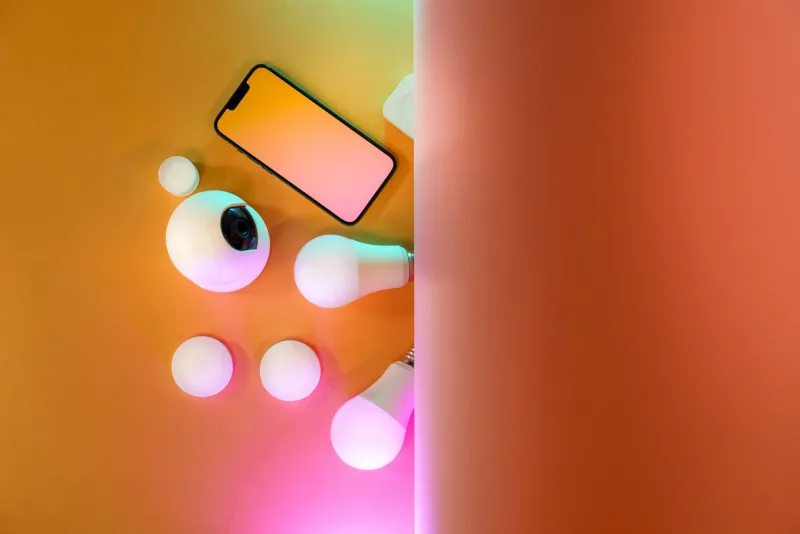
Somewhere in a drawer, closet, or box in your garage, there's probably a smart home device that no longer does what it was supposed to do. Maybe it's a Wink hub that became a $50 paperweight when the company tried to flip to a subscription model. Maybe it's a Nest product that got absorbed into Google's ecosystem and slowly stripped of the features that made you buy it. Maybe it's a Samsung SmartThings setup that made perfect sense in 2018 and now requires a architecture diagram just to explain to your partner why the lights won't turn off.
The promise of the smart home was never the hardware. It was integration — the idea that your lights, locks, thermostat, cameras, and appliances would learn your habits and work together without you babysitting them. We're further from that promise today than we were five years ago, and the reasons why are almost entirely self-inflicted by the industry.
The Acquisition Graveyard
Nothing kills a smart home ecosystem faster than a corporate acquisition, and the past decade has been a bloodbath. Google bought Nest in 2014 and spent years cannibalizing it into the broader Google Home umbrella, alienating the original user base in the process. Amazon absorbed Ring and Blink, then proceeded to run them as parallel products with overlapping features and confusing integration stories. Apple's HomeKit promised a premium, privacy-first alternative and then spent years being too restrictive to actually build a practical setup around.
Smaller players got it even worse. Insteon, one of the more reliable smart home protocols, went dark overnight in 2022 — servers shut down, no warning, devices bricked. Wink's saga has become almost legendary in home automation circles: a solid platform that cycled through multiple owners and funding crises before landing in a state of permanent uncertainty. Logitech killed its Harmony remote line, taking with it one of the few products that actually bridged the gap between traditional AV equipment and smart home controls.
Every one of these collapses left real people with real money invested in hardware that suddenly didn't work as advertised. And yet the industry kept selling the dream.
The Fragmentation Problem Nobody Fixed
Here's the dirty secret of smart home tech: the devices in your house are almost certainly not talking to each other the way the marketing suggested they would. They're talking to the cloud. Your smart bulb sends a signal to a server in Virginia, which sends a signal back to your phone, which sends a command back to the server, which tells the bulb to turn on. It's absurd, it's fragile, and it means that when the company's servers go down — or the company goes under — your light switch stops working.
Matter, the cross-industry smart home standard that was supposed to fix all of this, launched with genuine fanfare in 2022. The idea was sound: a universal protocol backed by Apple, Google, Amazon, and Samsung that would let devices from different manufacturers actually communicate locally. The reality has been messier. Matter adoption has been slow, the implementation has been inconsistent, and plenty of legacy devices will never be updated to support it. It's a step forward, but it's not the clean reset the industry needed.
In the meantime, every major platform is aggressively pushing its own ecosystem. Amazon wants everything to run through Alexa. Google wants everything in Google Home. Apple wants everything in HomeKit. None of them play particularly well with each other, and all of them have a financial incentive to make switching costs as high as possible.
The Privacy Angle Nobody Talks About Enough
There's a security and privacy dimension to this fragmentation that deserves more attention. Every hub, bridge, and cloud-dependent device in your home is a potential entry point. Devices that rely on manufacturer servers for basic functionality are also sending behavioral data — when you wake up, when you leave, when you go to sleep — to companies whose privacy policies are written by lawyers, not by people who actually care about your data.
When a company gets acquired or goes bankrupt, those data assets don't disappear. They get sold, transferred, or absorbed. The Ring doorbell footage that Amazon's servers are holding isn't governed by the same standards you might assume. Older devices that no longer receive firmware updates become permanent vulnerabilities on your home network. This stuff matters, and the smart home industry has done a poor job of making it legible to everyday consumers.
Building a Setup That Won't Betray You
The good news is that there's a more resilient way to do this, even if it requires a little more upfront thinking.
Go local-first wherever possible. Platforms like Home Assistant run on a local server — a Raspberry Pi, an old mini PC, whatever you have — and don't depend on any company's cloud infrastructure to function. It has a learning curve, but it's genuinely powerful and owned by you.
Treat Z-Wave and Zigbee devices as your foundation. These protocols communicate locally, don't require cloud accounts, and are supported by a wide range of hardware. They're less flashy than Wi-Fi devices but dramatically more reliable.
Be skeptical of any device that requires an account just to work on your own network. That's a red flag. The account means the cloud, and the cloud means dependency.
Research the company's track record before you buy. Has the company killed products before? Do they have a history of sunsetting features? A two-minute search can save you from buying into a platform that'll be dead in 18 months.
Avoid building around a single ecosystem's hub. The more your setup depends on one company's continued goodwill, the more vulnerable you are to the next pivot or acquisition.
The smart home can still be genuinely useful — it just requires approaching it with a healthy skepticism that the marketing absolutely does not want you to have. Build for resilience, not for the demo. Your future self, standing in a kitchen full of devices that actually work, will thank you.