Checkmark Charade: Why the Symbols Meant to Build Online Trust Have Become Almost Useless
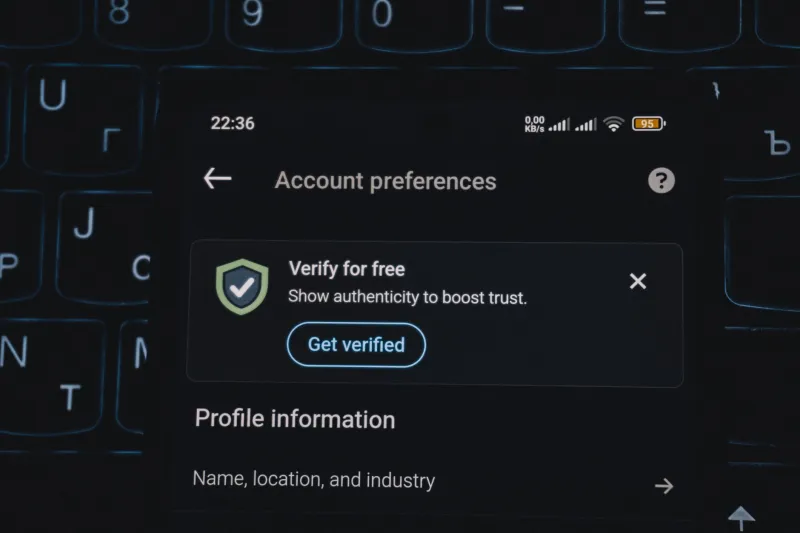
Somewhere along the way, a small blue checkmark became one of the most coveted symbols on the internet. It was supposed to mean something specific: this account is who it claims to be. A verification signal. A shortcut for trust in an environment where trust is hard to establish and easy to fake.
Then Elon Musk made it available for $8 a month, scammers started buying it in bulk, and the entire premise collapsed in real time for anyone paying attention.
But here's the thing — the checkmark problem isn't just a Twitter/X story. It's a symptom of something much broader: the systematic erosion of online trust signals across virtually every platform and context where they exist.
What Verification Was Actually Supposed to Do
The original logic behind platform verification was sound. On a network where anyone can claim to be anyone, some form of identity confirmation helps users distinguish between, say, the actual CDC and a parody account spreading health misinformation. Or between a brand's official support account and a lookalike designed to harvest your login credentials.
Verification was, in theory, a form of editorial curation. Platforms were saying: we've done some due diligence here, and this entity is what it claims to be. That's a meaningful service when it works.
The problem is that meaningful verification is expensive, slow, and doesn't scale. It requires human review. It requires ongoing monitoring. It requires revoking badges when circumstances change. None of that fits neatly into the growth-at-all-costs operational model that defines most major platforms.
So shortcuts happened. Verification became tied to follower counts. Then to ad spend. Then, in some cases, to direct payment. Each compromise chipped away at the underlying signal until what remained was largely decorative.
The Scammer's Playbook
Bad actors noticed the drift before most users did. The evolution of verification gaming is genuinely impressive in a deeply unsettling way.
On X (formerly Twitter), within weeks of the paid verification rollout, researchers documented hundreds of accounts using purchased blue checks to impersonate pharmaceutical companies, government agencies, celebrities, and financial institutions. Some ran crypto scams. Some spread disinformation. The checkmark that was supposed to signal legitimacy became, briefly, a scammer's favorite prop — because it conferred a visual credibility that users were conditioned to trust.
The pattern extends well beyond social media. "Verified" seller badges on e-commerce platforms like Amazon and eBay have been compromised by coordinated review fraud and fake business registrations. Security researchers have documented marketplaces where sellers can purchase positive review histories to game the trust signals that shoppers rely on.
On Google, the "Guaranteed" badge for local service providers has been exploited by fraudulent contractors who pass the initial screening process and then vanish with deposits. The badge implies ongoing vetting that simply isn't happening at the volume Google operates.
The Padlock Problem Nobody Talks About
Here's one that catches a lot of people off guard: that padlock icon in your browser's address bar doesn't mean the website is safe. It means the connection between your browser and that website is encrypted. That's a meaningful distinction.
A phishing site designed to steal your banking credentials can — and routinely does — have a padlock icon. The site just needs an SSL certificate, which are available for free from services like Let's Encrypt. The encryption is real. The website is still fraudulent.
For years, browser makers and security communicators pushed the message "look for the padlock" as a basic safety tip. That advice wasn't wrong exactly, but it was incomplete in a way that created a dangerous false sense of security. Cybercriminals adapted quickly. Studies from the Anti-Phishing Working Group found that a majority of phishing sites now use HTTPS — because they know users have been trained to look for it.
The padlock means your conversation with the site is private. It says nothing about whether the site itself is trustworthy.
Vanity Verification and the Credibility Market
Not all verification gaming is malicious. A significant chunk of it is just... human nature.
When verification signals confer status — and they do, because users treat them as credibility markers — a market for that status inevitably develops. Influencers have built entire side hustles around helping smaller creators game platform algorithms to hit the follower thresholds that unlock verification. PR firms offer "verification assistance" as a service. On some platforms, the path to a badge runs straight through advertising spend rather than any genuine identity confirmation.
The result is a credential that reflects a mix of genuine public interest, savvy self-promotion, financial resources, and gaming ability — rather than the simple identity confirmation it was designed to convey. When a badge means too many things, it effectively means nothing.
What Platforms Could Do (And Mostly Won't)
Fix this properly? It's doable. Some platforms are making genuine progress.
LinkedIn's verification system, which ties identity confirmation to government ID or employer email, is more meaningful than most — though it has its own gaps. Apple's App Store review process, while imperfect, creates a higher barrier to entry than pure web distribution. Some financial platforms use multi-factor identity verification that actually correlates with reduced fraud rates.
The common thread in approaches that work: they're slower, more expensive, and require ongoing maintenance rather than a one-time check. They don't scale as cheaply as a badge you sell for $8 a month.
The business incentives aren't aligned with meaningful verification. Verification systems that actually work require friction, and friction is the enemy of engagement metrics. Until that calculus changes — through regulatory pressure, genuine competitive differentiation, or sustained user backlash — most trust signals will remain more performance than substance.
Developing Your Own Skepticism
In the absence of reliable platform-level signals, the burden shifts to you. That's not ideal, but it's the reality.
Treat visual trust signals as a starting point, not a conclusion. A checkmark or badge should prompt you to look closer, not stop looking. Verify through independent channels — if an account claims to be your bank, navigate directly to your bank's website rather than clicking through. Look at account history, not just current badges. Be especially skeptical of any "verified" account that's asking you to act quickly, send money, or share credentials.
The internet built its trust infrastructure in a hurry, and it shows. Until platforms are held accountable for the signals they issue — and the harms that result when those signals mislead — a healthy dose of skepticism is the best security tool you've got.