Your Phone Didn't Get Slower — They Made It That Way
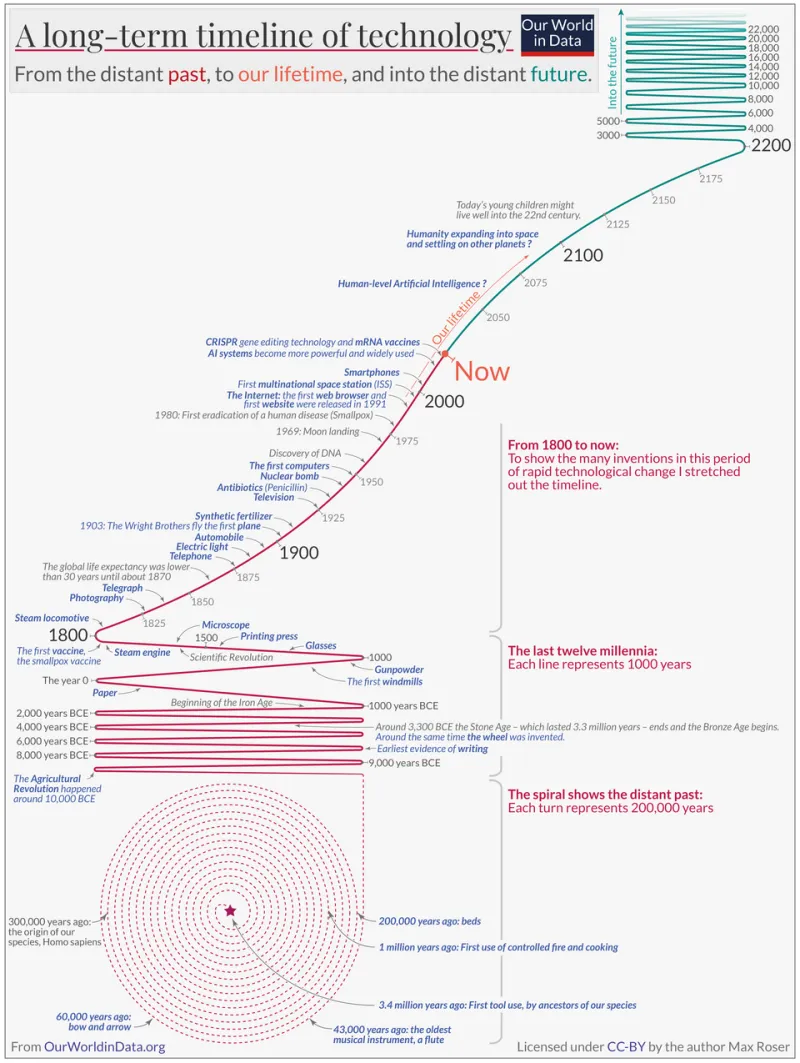
Photo: Max Roser, Our World in Data, CC BY 4.0, via Wikimedia Commons
You didn't imagine it. Your phone — the one that felt blazing fast when you unboxed it — is now stuttering through apps you use every day. Your laptop takes twice as long to wake up. Your tablet lags on a video call. And somehow, right around the time things got unbearable, a new device from the same manufacturer dropped with a very convenient upgrade deal in your inbox.
Coinidence? Nope. Welcome to what tech critics have started calling the silent tax — the systematic degradation of your existing hardware through software updates you didn't ask for and can't easily refuse.
The Update That Wasn't Really for You
Here's how it usually works. A major OS version drops — iOS 17, Android 14, Windows 11 — and your device is technically "supported." You install it because security patches are bundled in, and skipping updates feels reckless. What the release notes don't tell you is that the update was architecturally designed around hardware specs your device doesn't have.
Apple is the most documented offender here. After a 2017 lawsuit settlement that cost them $113 million, the company officially admitted to throttling CPU performance on older iPhones through iOS updates. Their stated reason? To prevent unexpected shutdowns caused by degraded batteries. That's... partly true. But conveniently, the throttling also made older phones feel sluggish enough that upgrading to a new model felt like the only rational option.
Microsoft pulled a similar move with Windows 11, introducing hardware requirements that locked out perfectly capable machines — not because those machines couldn't run the OS, but because the company drew an arbitrary TPM 2.0 line in the sand. Millions of functional PCs were suddenly classified as "unsupported," leaving users with the choice of staying on an aging OS or buying new hardware.
The Numbers Don't Lie
Real-world benchmark data paints a damning picture. Independent testing by outlets like Tom's Hardware and Notebookcheck has repeatedly shown that devices running the latest OS versions on older hardware suffer measurable performance hits that go beyond what new feature overhead alone would explain.
A 2023 analysis of iPhone 12 performance across iOS versions showed a consistent drop in Geekbench single-core scores between iOS 15 and iOS 16 — a decline that couldn't be attributed to battery health alone. Similar patterns appeared in Android devices. A Galaxy S20 running Android 13 showed higher memory pressure and longer app launch times compared to the same device on Android 11, despite no meaningful new background processes being added by the user.
On the laptop side, Windows 11's telemetry overhead and revised power management schemes have been linked to reduced battery life and increased thermal throttling on machines from 2019 and 2020 — hardware that was sold as more than capable of handling future updates.
App bloat compounds the problem. When developers build for the latest OS, they stop optimizing for older versions. Apps grow heavier with each release — Slack, Instagram, and even Google Maps have all seen significant binary size increases over the past three years — and older hardware pays the price in RAM pressure and slower load times.
The Deliberate Engineering Angle
It's easy to frame this as negligence, but the evidence increasingly points to something more calculated. Planned obsolescence through software isn't a bug — it's a business model.
Consider the economics: hardware margins are thin and getting thinner. The real money in consumer tech is in services — iCloud subscriptions, app store cuts, Microsoft 365 licenses, Google One plans. To keep that revenue flowing, manufacturers need users on the latest devices running the latest ecosystems. An iPhone 11 running iOS 15 is a revenue leak. An iPhone 15 running iOS 17 is a subscription machine.
This creates a direct financial incentive to make older hardware feel inadequate, without ever technically "breaking" it. It's a masterclass in plausible deniability. They never bricked your phone. They just made it annoying enough that you did the rest yourself.
What You Can Actually Do About It
The good news: you're not completely powerless here.
Delay major OS updates. This sounds counterintuitive given security concerns, but waiting 60–90 days after a major release lets you read real-world performance reports before committing. Security patches can often be applied independently, and many vulnerabilities take months to be actively exploited in the wild.
Check your battery health first. On iPhone, go to Settings > Battery > Battery Health. If you're below 80%, replacing the battery (Apple's out-of-warranty fee is around $99) will frequently restore most of your lost performance without an upgrade. Third-party repair shops often do it for less.
Trim the app fat. Audit what's running in the background. On Android, developer options let you limit background processes. On iOS, disabling Background App Refresh for non-essential apps can reclaim meaningful performance headroom.
Consider alternative operating systems. For older laptops especially, lightweight Linux distributions like Linux Mint or Fedora can breathe serious life into machines that Windows has essentially abandoned. It's not for everyone, but for a capable user, it's the most powerful reclamation move available.
Opt out where you legally can. The EU's Right to Repair legislation is starting to force manufacturers to provide longer software support windows and independent repair access. The US is catching up — several states have passed or are actively considering right-to-repair laws. Staying informed and supporting those efforts matters.
The Bigger Picture
The silent tax is real, it's deliberate, and it's costing American consumers billions in premature hardware replacements every year. The average US consumer replaces their smartphone every 2.5 years — a cycle that benefits manufacturers enormously and the planet not at all.
Your tech should serve you, not the other way around. The next time your device starts feeling sluggish right after an update, don't reach for your credit card first. Reach for your settings menu — and maybe your state representative's contact page while you're at it.